
FIELD NOTES
Why a sauna hat.
A small object. An old practice. The reason the second round gets easier.
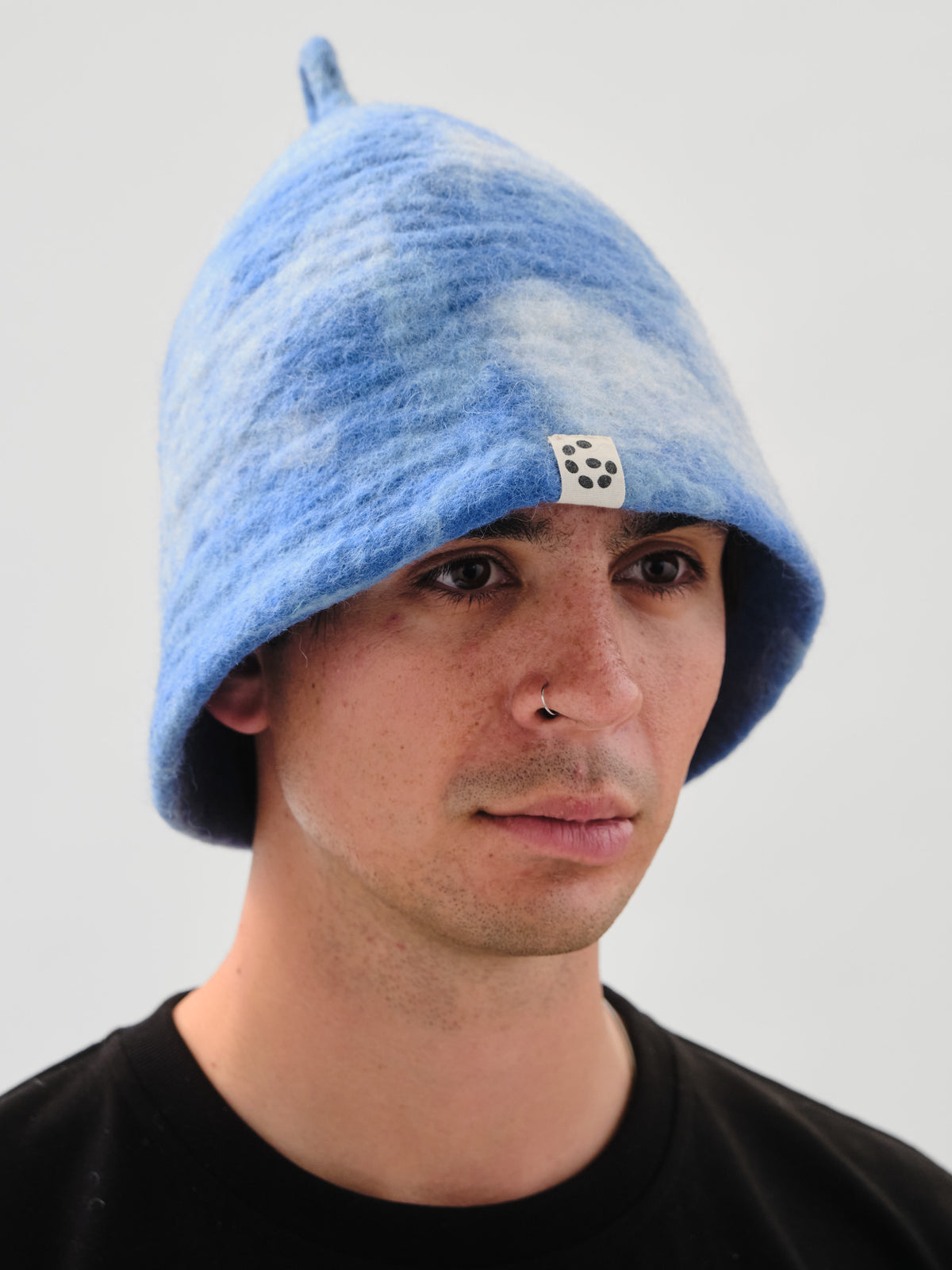
A sauna hat exists because the hot room asks different things of different parts of the body. Your head sits highest. It meets the sharpest air first. Your scalp, ears, and hair usually decide the session is over before the body has settled in.
A felted wool hat buys time. Not by cooling the room down, but by buffering the head from the harshest heat so the body can stay with the practice longer.
Old sauna cultures solved this with wool for a reason. Natural fiber. Dense felt. No gadget. Just the right object for the room.
01 / WHY IT EXISTS
The hat is not costume. It is permission to stay.
The sauna strips things away. Phone outside. Shoes off. Nothing to perform. Just heat, wood, water, breath, and the people sitting with you.
In that room, the problem is not style. The problem is sequence. Heat rises. The highest air reaches the head first. The scalp gets loud. The ears light up. Hair holds the heat. The body may still be settling in, but the head is already asking to leave.
A wool sauna hat changes that sequence. Dense felt creates a quiet buffer between the head and the hottest air in the room. Less head heat. Less hair heat. More time for the body to settle into the sauna.
That is the whole idea. A small object that helps the old practice last a little longer.
WITH VS WITHOUT
What changes when the head is not the limiting factor.
The point is not more suffering. The point is staying with the practice.
02 / WHERE IT COMES FROM
Banya. Sauna. Suitsusaun.
The Russian banya. The Finnish sauna. The Estonian smoke sauna. Three different names. The same practice. The same hat.
In Northern Europe, where sauna use dates back thousands of years, sauna hats aren't a trend. They're standard practice. Wool felted by hand. Worn by working people who needed to bathe in the heat and walk back out into the snow.
That practice has come west slowly. First into wellness centers. Then private homes. Now riverfront cabins in the Pacific Northwest, bathhouses in Brooklyn, public saunas in Los Angeles. The hat travels with the heat.
03 / BUILT FOR THE HEAT
What makes the right sauna hat.
-
Full head and ear coverage Where most of the discomfort starts.
-
100% organic New Zealand wool Naturally insulating. Naturally breathable. Antimicrobial by nature.
-
Wet-felted by hand One continuous form. No stitching, no glue, no synthetic shell.
-
Built for years of heat Felted wool settles with each session and is made for long use.
-
Made in Nepal By a textile lineage that goes back centuries.
04 / THE MATERIAL
Wool, water, soap, friction.
Wool is a natural insulator. It traps air. It breathes. It absorbs moisture without feeling wet. It manages heat better than cotton or synthetic fleece.
Cotton soaks up sweat and sits cold against your scalp. Synthetics are not built for repeated high heat and steam. Felt is the answer. Wool, made denser.
The fibers lock together with water, soap, and friction. No stitching. No glue. No coating.
05 / THE PROCESS
One direction at a time.
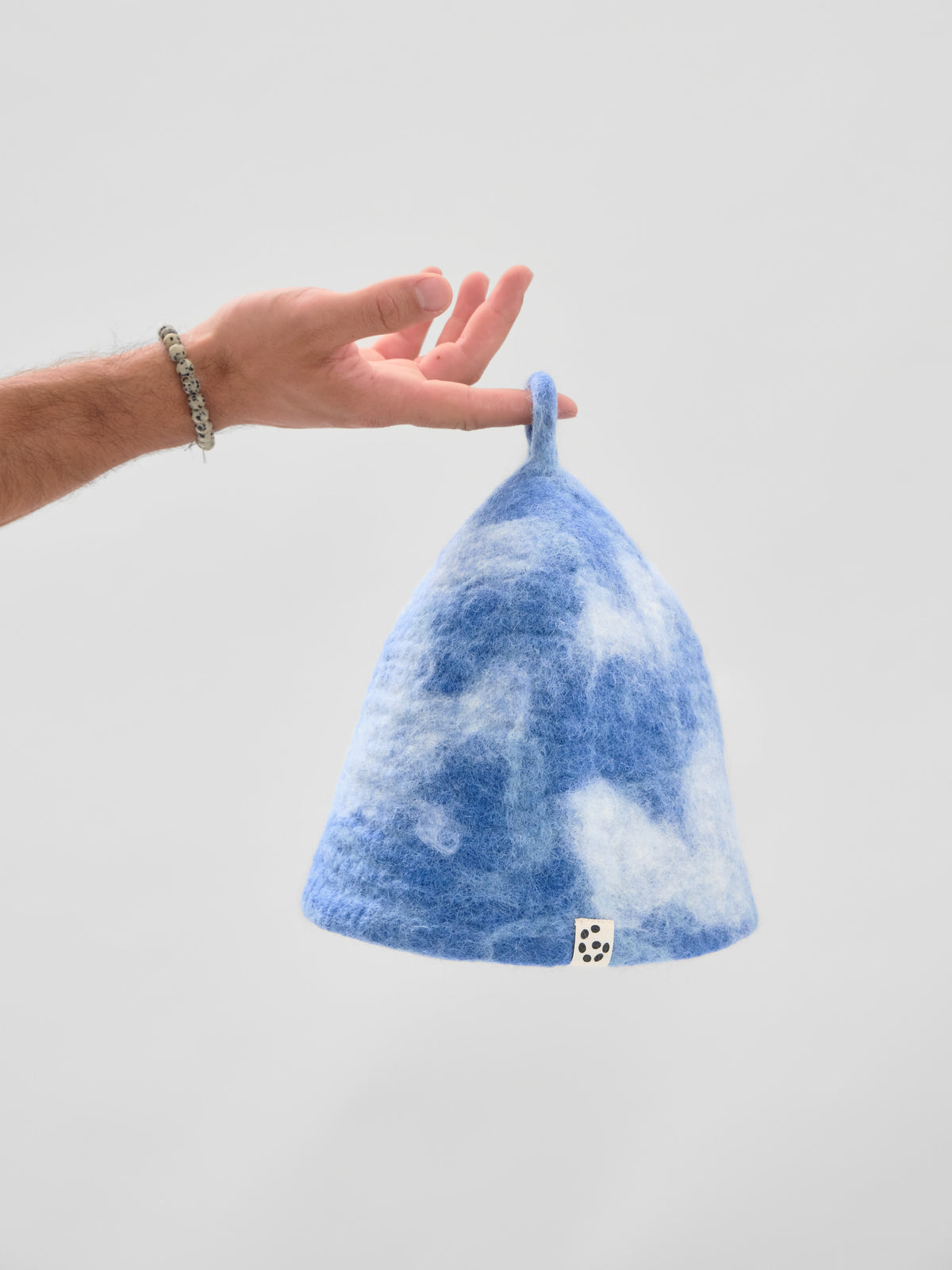
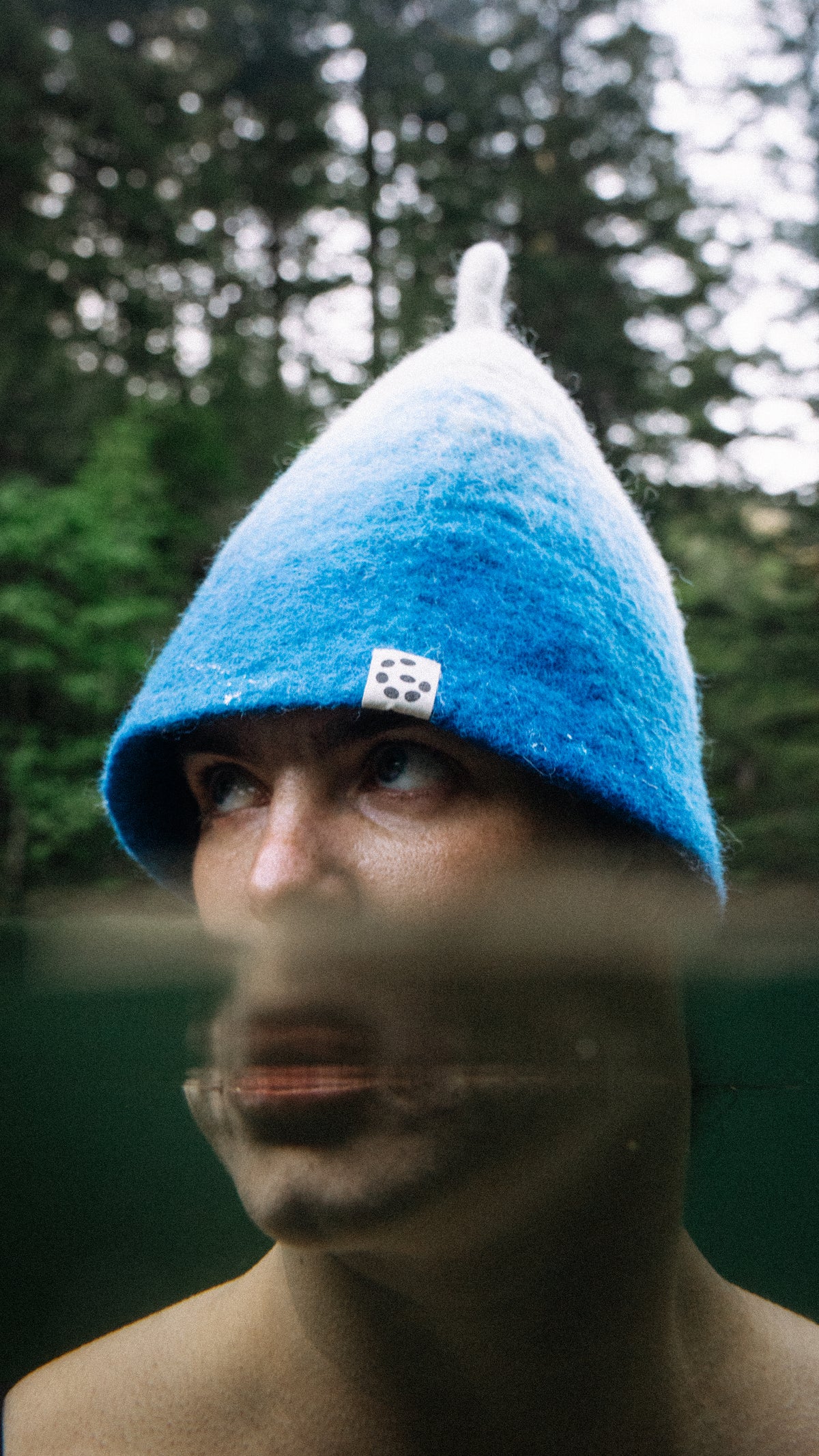
Wet felting is one of the oldest textile techniques in the world. Older than weaving. The maker lays the fibers by hand, one direction at a time. Reads the wool. Places more where it needs to insulate, less where it needs to breathe.
The hat sets into a single continuous piece. Not sewn. Not assembled. Grown.
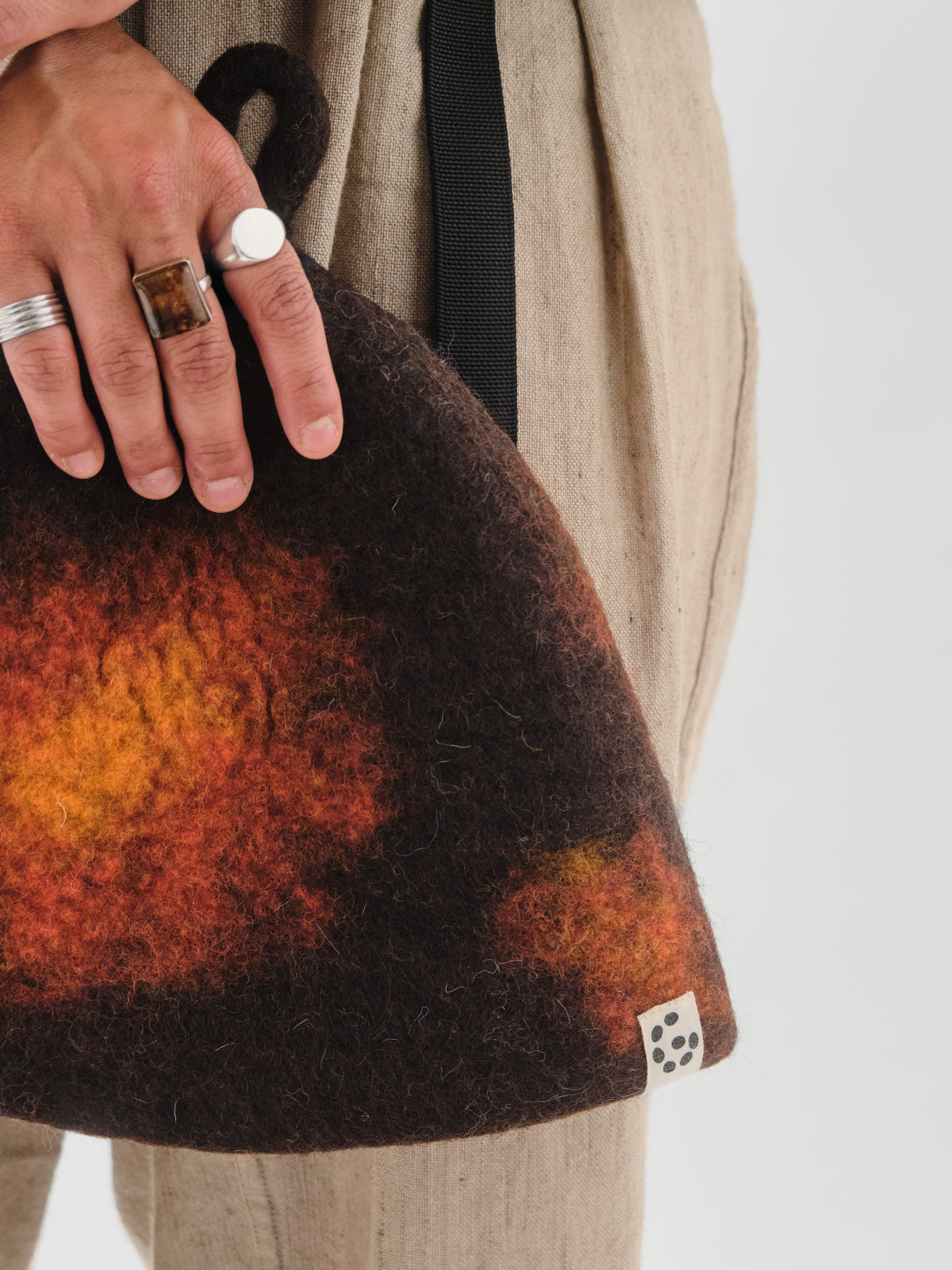
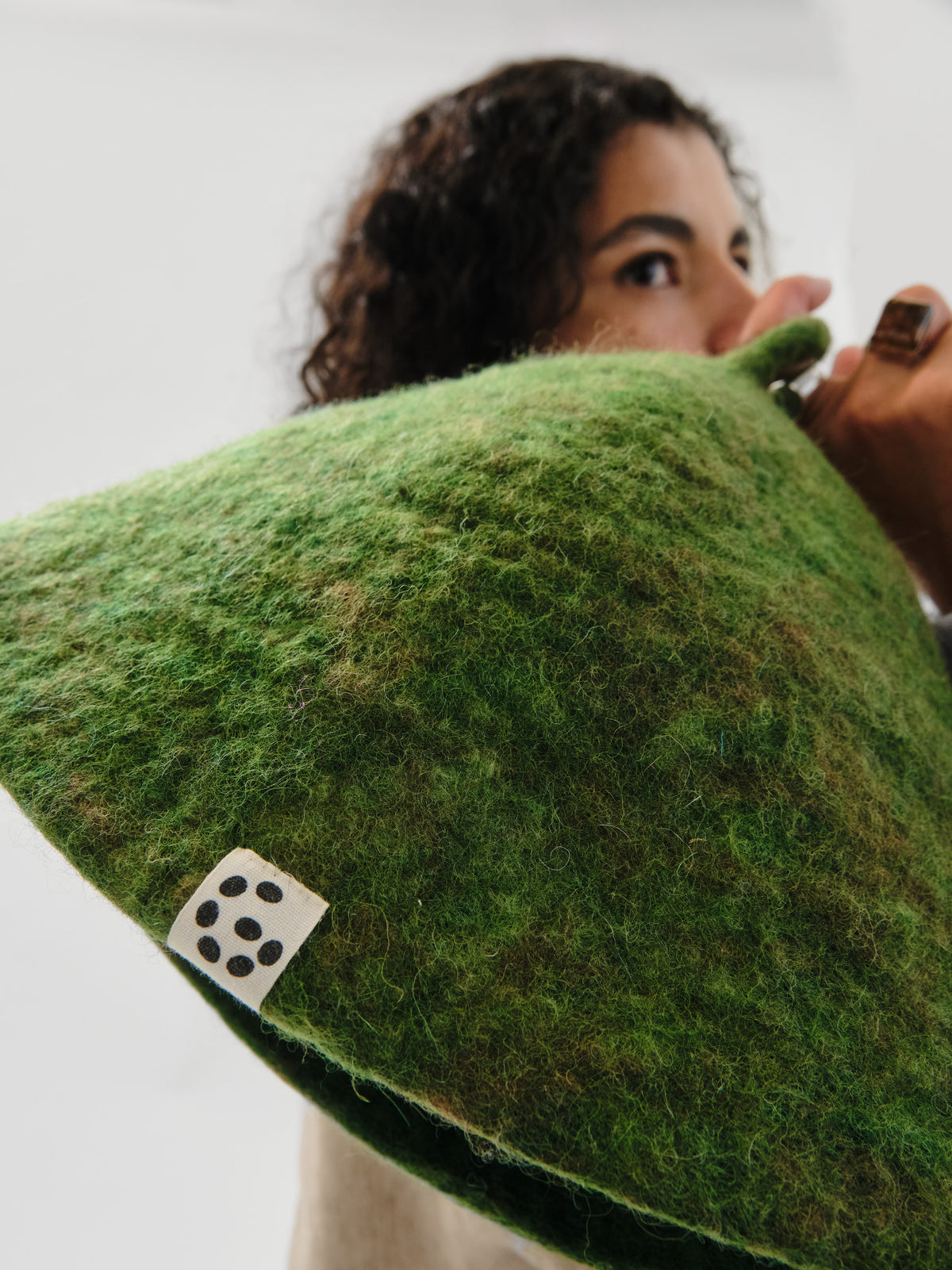
Every hat is different. The placement of the fibers is intuitive. The pattern emerges in the felting. None alike.

06 / THE MAKERS
Made by hand, in Nepal.
Nepal has a centuries-old tradition of wool textile craftsmanship. The makers we work with come from a lineage of hand-felting. They place the fibers, they tend the wool, they shape the hat.
We use 100% organic New Zealand wool, sent to Nepal, felted by hand, and shipped back. It isn't the cheapest way to make a hat. It's the right way to make this hat.
07 / IN PRACTICE
How to wear it.
Wear it dry. Walk into the sauna. Sit on the bench. Let the heat come.
The hat absorbs steam slowly. The wool will feel damp by the end of the session. That's expected. The fibers continue to felt with use, settling into your head over time.
Take the hat off before the cold plunge. Wool keeps insulating wet, and you want the cold to find your scalp. Pull it back on after, for the walk back to the heat.
Hand wash cold. Reshape damp. Air dry flat.
08 / THE SKEIN
Pick your sensation.
Skein No. 02 is two hundred and fifty hand-felted sauna hats. Four sensations. Drift, the wind moving through the room as your shoulders drop. Threshold, the crossing into cold. Pulse, the heartbeat under the heat. Ground, the return to your body afterward.
Each hat is wet-felted by hand. Each hat is one of one. The sensation you choose is consistent. The pattern is not.
09 / COMMON QUESTIONS
What is a sauna hat?
A small wool hat worn inside a sauna or steam room. Its job is to insulate your scalp from the highest heat in the room, which sits at the ceiling. It lets you stay in the heat longer and come out more comfortable.
Do I really need one?
You can sauna without one. People do every day. But once you wear a wool hat in a real sauna, you notice the difference. Your sessions get longer. Your hair doesn't burn. Your face stops flushing as fast. The body has more time to warm.
Why wool, not synthetic?
Wool is a natural insulator that breathes, regulates moisture, and holds up to repeated sauna use. Cotton absorbs water and sits cold and heavy on your scalp. Synthetic fleece is not made for repeated high heat and steam. Felted wool is the old answer because it works.
What does "hand-felted" mean?
Wet felting is one of the oldest textile techniques. The maker places wool fibers by hand, one direction at a time, then uses water, soap, and friction to lock the fibers together into a single continuous form. No stitching. No glue. No synthetic shell.
Does a sauna hat protect your hair?
Yes. The hat sits between the highest heat in the room and your scalp, which means your hair stays cooler too. Long-term high heat dries hair out, and a wool hat moderates that exposure. People who sauna often notice less brittleness over time.
Does it work in dry saunas as well as steam?
Yes. The hat insulates against heat, not specifically against steam. It works in dry Finnish saunas, traditional Russian banyas, Estonian smoke saunas, and modern infrared rooms. Steam will cause the wool to absorb more moisture, but the function is the same.
Do I wear it in the cold plunge?
No. Take it off before the plunge. Wool keeps insulating when it's wet, and you want the cold to find your scalp. The thermal contrast is the point. Put the hat back on for the next round in the heat.
How do I wash it?
Hand wash cold with mild soap. Press the water out without wringing. Reshape while damp and air dry flat, away from direct heat. Heat and agitation will continue to felt the wool, which can shrink the hat.
How long does it last?
A well-made felted wool sauna hat is built for years of regular use. The fibers continue to settle with each session, and the hat shapes to your head over time. There are no seams or stitches to fail.
What size is it?
One size. Wet-felted wool is forgiving and shapes to your head with use. Most adults find the fit settles in within the first three or four sessions.